November kitchen
Stews for slow
November afternoons
Two spoon dishes for the afternoons when staying in is the whole plan: an old-fashioned Asturian fabada and a lentil and pumpkin pot that mostly looks after itself.
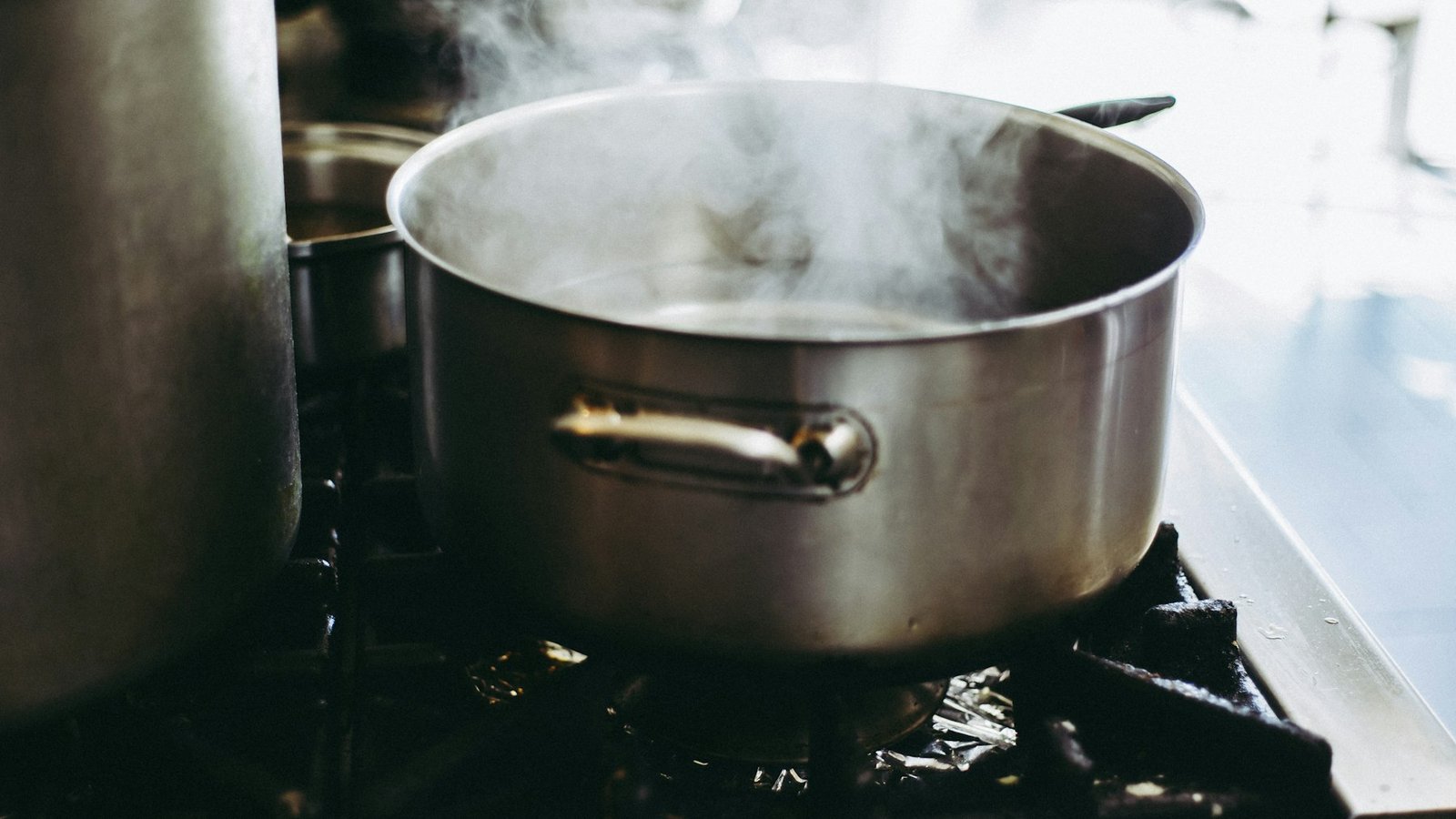
At some point in November the light at four o’clock changes, and somebody takes the big pot out of the cupboard without a word being said.
A spoon dish asks for very little. Dried beans or chickpeas, a bit of pork or some vegetables, water, and a flame so low the broth barely trembles. What it demands is time, and it won’t be hurried. That is what makes it such a good excuse. While the pot works you can read, tidy a drawer, ring someone who has been waiting weeks for a call. The kitchen takes care of the rest. Anyone fond of cassoulet or a proper bean soup will feel at home.
Before you start
A few habits apply to almost any pot like this. Large pulses such as fabes go into cold water overnight, with plenty of room, because they double in size. Lentils skip that step. A heavy-bottomed pot is worth having, clay, cast iron or thick steel, so the heat arrives evenly. And cook more than you need on purpose, because nearly everything eaten with a spoon is better on the second day.
no hurry
the one ingredient you can’t buy
Fabada, or the art of not stirring
Asturian fabada is made with fabes, a large, creamy white bean that has its own protected designation of origin in Asturias. The rest is the compango: chorizo, morcilla (blood sausage), lacón (cured pork shoulder) and pork belly, which give up fat and flavour to the broth over hours. The odd thing about the method is that a spoon never goes near it. You hold the pot by its handles and swirl it, so the beans don’t break.
There is one more gesture, which Asturians call asustar, to frighten. When the water comes to the boil you pour in a glass of cold water to stop it, and you do that three times. People who cook it this way swear the beans come out with their skins intact and a texture like butter.
You will need
- 500 g (about 1 lb) fabes, or large dried white beans
- 2 Asturian chorizos
- 2 Asturian morcillas (blood sausage)
- 200 g (7 oz) cured pork belly
- 1 lacón of about 400 g (14 oz), desalted
- A pinch of saffron threads
- Salt, only at the end
Method
The night before, put the beans in cold water, three times their volume. In another bowl, soak the lacón and pork belly to draw out the salt, changing the water once.
Drain the beans and put them in a tall pot with the lacón, belly and chorizos. Keep the morcillas aside. Cover with cold water by three fingers’ width and set over medium heat, lid off.
When it comes to the boil, skim, then frighten the beans: add a small glass of cold water. Repeat three times, each time it boils again.
Turn the heat to its lowest and set the lid almost closed. Crush the saffron in a mortar with a little broth and add it. Cook for 1½ hours without stirring, swirling the pot now and then. If the water drops, top up with cold water only.
Add the whole morcillas 40 minutes before the end. When the beans are tender and the broth has thickened, taste, and only now add salt.
Turn off the heat and let it rest, covered, for 20 minutes. Cut up the meats and serve everything together from the pot.

Fabada just off the heat, about to rest.
Lentils with pumpkin, the most obliging pot
Lentils are the most obliging of the pulses: they need no soaking, they cook in about an hour and they take on whatever flavour is put near them. Here the flavour comes from the sofrito, made without hurry until the onion, pepper and tomato turn into something like jam, from the paprika, and from a whole chorizo that slowly gives up its red fat. The pumpkin goes in near the end and breaks down a little, and that is enough to thicken the broth with no flour and no tricks.
One detail that saves grief: if you need to add water while it cooks, make it hot, because cold water halts the simmer and leaves the lentils firm. And leave the salt until they are nearly done, since the chorizo brings its own.
You will need
- 300 g (10½ oz) brown lentils
- 1 cooking chorizo of about 150 g (5 oz)
- 300 g (10½ oz) peeled pumpkin or squash
- 1 onion
- 1 green pepper
- 2 carrots
- 3 garlic cloves
- 1 ripe tomato, grated
- 1 teaspoon sweet paprika
- 2 bay leaves
- 4 tablespoons extra virgin olive oil
- Salt, and a few drops of vinegar to serve
Method
Dice the onion, pepper and carrots small. In the pot, warm the oil over medium-low heat and sweat the vegetables for 15 minutes, until soft and without colour.
Add the sliced garlic for a minute, then the grated tomato. Cook 5 minutes more, until the sofrito looks like thick jam.
Take the pot off the heat for a few seconds and stir in the paprika, which burns almost at once. Add the rinsed lentils, the whole chorizo and the bay leaves. Cover with cold water by three fingers’ width.
Bring to the boil, skim, turn the heat to its lowest and set the lid almost closed. Cook for 40 minutes. If it needs water, hot only.
Add the pumpkin in large chunks and cook 20 to 25 minutes more, until the lentils are tender and the pumpkin begins to collapse. Taste and add salt now.
Lift out the chorizo, slice it and return it to the pot. Rest, covered, for 10 minutes and serve with a few drops of vinegar on top.

The lentils, with the pumpkin already melting into the broth.
Both pots freeze well in single portions and keep for three months without complaint. A bad week can be fixed with a tub of either one in the freezer.
When the pot has been working for a couple of hours, the house smells different, and whoever walks in notices before asking what is for dinner. That counts as part of the recipe too.
Put the pot on the heat and forget about it for a while.


