MUSIC
Seven records to
listen to slowly
Some records play in the background. Others change the temperature of a room. The second kind are rarely the loudest or the most recent. Someone made them with time, good hands and no great hurry to please everyone.
Having all the world’s music in a pocket has created an odd problem: there is plenty of supply and very little judgement. Choosing well has become a form of care, much like choosing good bread or good olive oil. With music there is some science behind it too. A review published in 2020 in Health Psychology Review pooled the results of 104 controlled trials and found that listening to music reduces stress, both in physiological measures such as heart rate and in how people say they feel.
controlled trials analysed
participants in total
Source: de Witte et al., Health Psychology Review, 2020
The selection below gathers seven records from different countries, decades and genres. They sound little alike. What they share is that none of them needs noise to hold up, that their songs talk about home, friendship, walking or saying nothing at all, and that they are made with a craft you notice around the tenth listen.
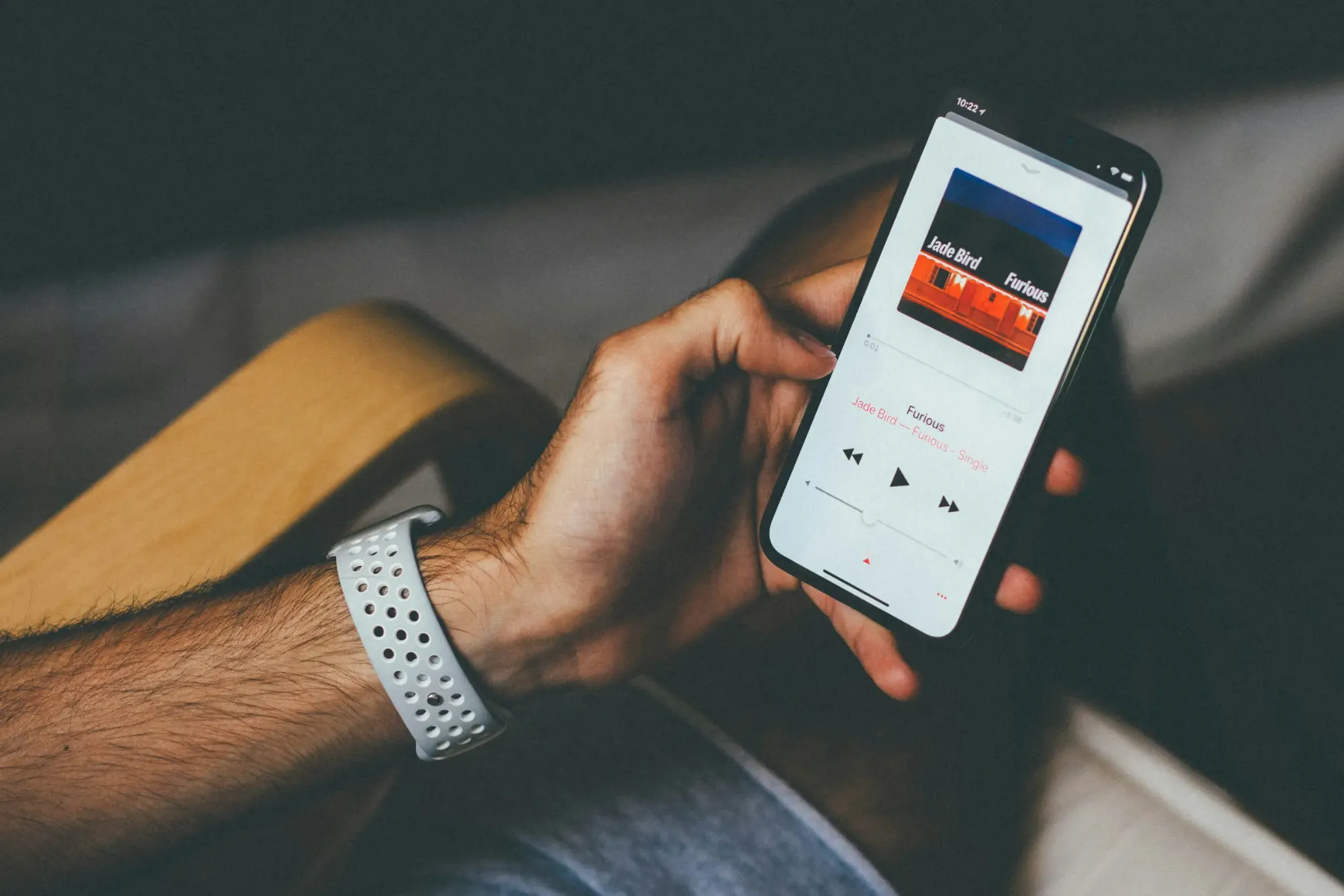
All the music in a pocket. Choosing is still up to us.
Seven records, no rush
For slow mornings
In Between Dreams
Jack Johnson · 2005
Recorded in Hawaii and produced by Mario Caldato Jr., this is a record of acoustic guitar, soft percussion and a voice that seems to sing without leaving the sofa. “Banana Pancakes” has a reputation as a Sunday morning song, and it earned it. “Better Together” and “Sitting, Waiting, Wishing” keep the same easy pulse to the end.
For Sunday afternoons
Getz/Gilberto
Stan Getz and João Gilberto · 1964
Recorded in New York in 1963 with Antonio Carlos Jobim on piano, it took bossa nova around the world and became the first jazz record to win the Grammy for Album of the Year, in 1965. Astrud Gilberto’s voice on “The Girl from Ipanema” is a lesson in simplicity. Stan Getz’s saxophone sounds like someone lowering their voice on purpose.
For cooking with company
Still Bill
Bill Withers · 1972
“Lean on Me” went to number one in the United States in 1972 and is still sung everywhere. The rest of the record is chamber soul: acoustic guitars, a restrained rhythm section and a voice that needs no decoration. It works very well with someone beside you peeling vegetables.
The music that ages best is usually the music that was in no hurry to get noticed.
For rainy afternoons
No Need to Argue
The Cranberries · 1994
Beyond their best-known song, the second album from the Limerick band holds ballads like “Ode to My Family” and “Ridiculous Thoughts”, carried by Dolores O’Riordan’s voice and its unmistakable break. Clean guitars, long melodies and a feeling of shelter, ideal for a rainy afternoon.
For long summer evenings
Con Todo el Mundo
Khruangbin · 2018
A trio from Houston that blends soul, dub, Thai funk and Middle Eastern sounds. There are almost no lyrics. Mark Speer’s guitar, Laura Lee’s bass and Donald Ray Johnson’s drums leave plenty of air between the notes. Pieces like “Maria También” and “August 10” call for open windows.
A house rule that works: one record a week. If it still feels welcome on the seventh day, it already belongs in the home.
For reading and focus
I Giorni
Ludovico Einaudi · 2001
The Turin pianist composed this record after a trip to Mali, and the kora of Ballaké Sissoko appears on some pieces. “Nuvole Bianche” opens a space of calm within a few minutes. Piano, strings and silences that are also part of the music. It goes well with reading, with work that needs concentration, or with the hour before sleep.
For a quiet dinner
Ali and Toumani
Ali Farka Touré and Toumani Diabaté · 2010
Two great musicians from Mali, one on guitar and the other on kora, recorded this album in London in 2005. It was released in 2010, four years after the death of Ali Farka Touré. It is a conversation between two instruments that listen to each other closely, at the pace of people with nothing to prove.
How to give them room
A full record lasts between thirty and fifty minutes, about as long as a stew takes to cook or a chapter takes to read. Listening to it whole, in the order it was recorded, is one of the simplest ways to do something slowly. Shuffled playlists are convenient, but they undo what the artist arranged with care.
No expensive equipment is needed. Decent headphones or a small speaker in the kitchen are enough. It helps to choose the record before starting, silence the phone and let the first song act as a signal that another part of the day has begun.
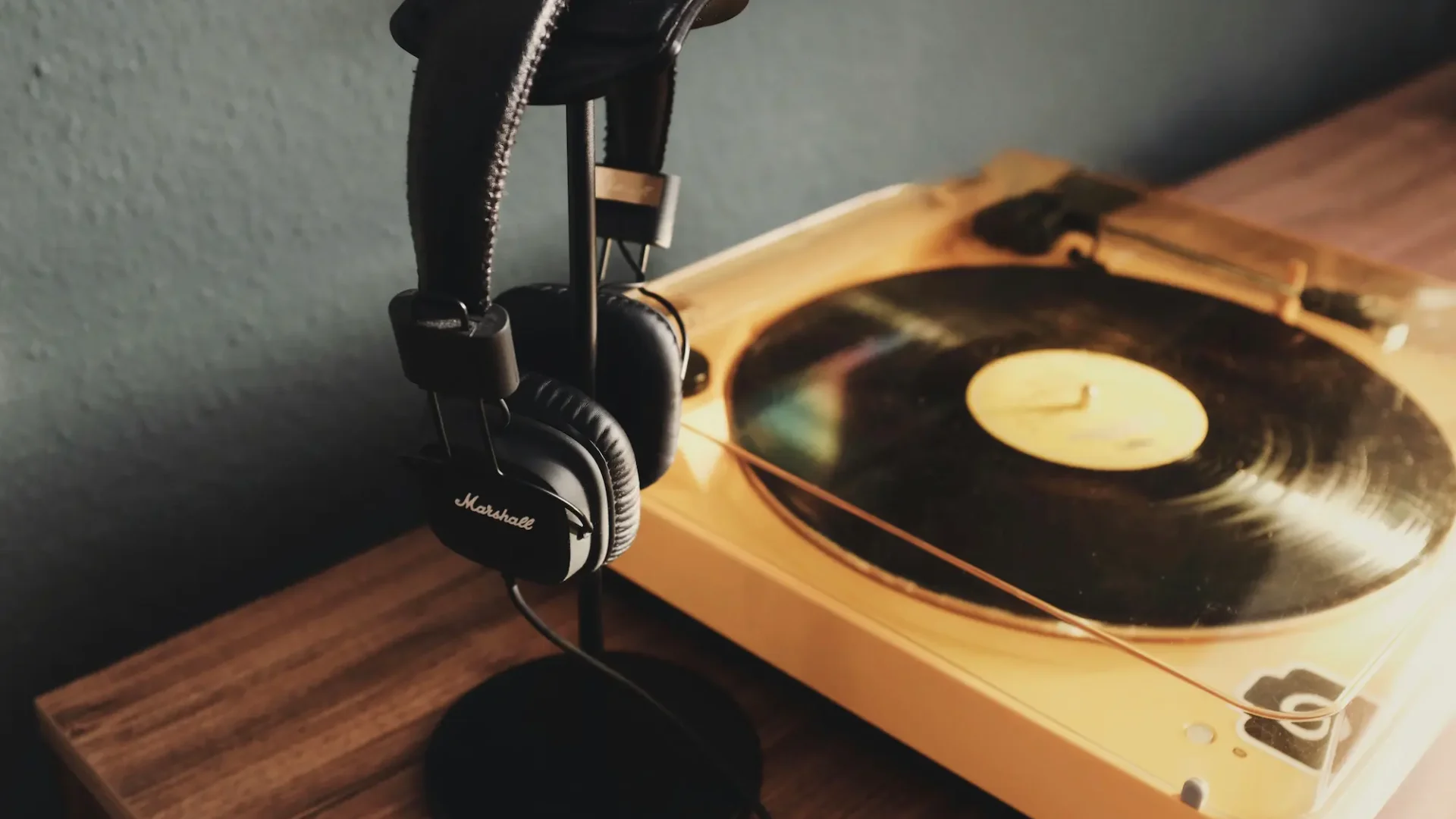
The quality of the recording matters too. Almost all of these records were made with real instruments, in real rooms, with few layers of production, and it shows as soon as they are heard with attention: the room and the air between the instruments can be heard. Anyone with a turntable will find good reasons to dust it off, and anyone streaming can switch on high quality in the platform’s settings.
What was the last record listened to all the way through, without checking the phone once?
Seven records are a starting point. Every home ends up with its own, and they almost always arrive by chance, from someone who said listen to this.
Put a record on and let it play to the end. Sometimes that is enough.
Sources and references
- Martina de Witte et al. Effects of music interventions on stress-related outcomes: a systematic review and two meta-analyses. Health Psychology Review, 14(2), 294-324, 2020. doi.org/10.1080/17437199.2019.1627897
- Recording Academy. Album of the Year, 7th Annual Grammy Awards (1965). grammy.com
